
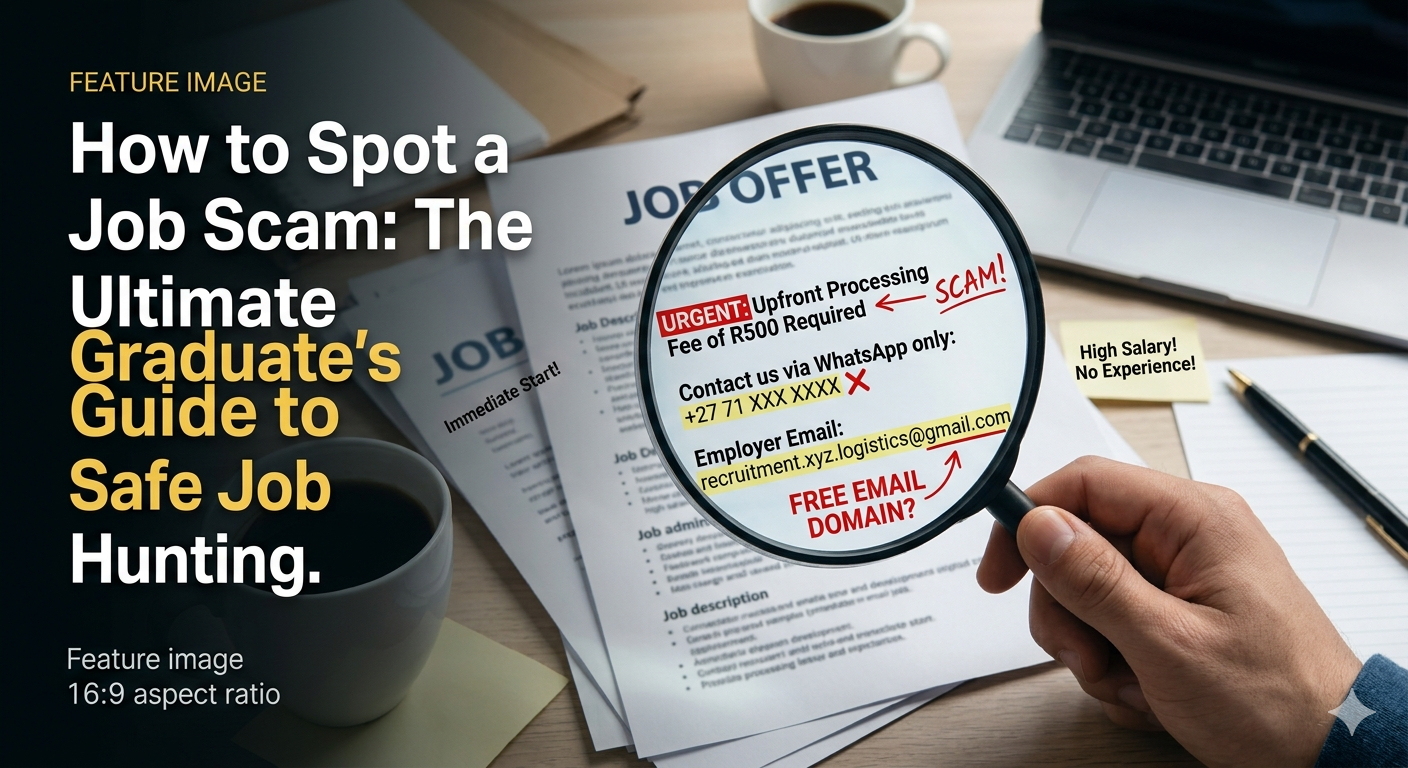
Finding a job as a graduate is an emotional rollercoaster. Between the pressure of starting a career and the excitement of finally receiving an offer, it is easy to let your guard down. Unfortunately, scammers prey on this exact vulnerability. Fake job offers are becoming increasingly sophisticated, using professional-looking logos and convincing language to steal your money or personal information.
Protecting yourself requires a shift in mindset: treat every unsolicited job offer with healthy skepticism until you have verified its legitimacy. Here is a comprehensive checklist to ensure your next career move is a safe one.
1. The “Too Good to Be True” Red Flag
The most common bait used by scammers is an inflated salary for minimal experience. If you receive an offer for a “Remote Data Entry” or “Administrative Assistant” position that pays significantly above the industry average for entry-level work, proceed with extreme caution. Genuine companies have budgets and market rates; they rarely overpay for roles that require little to no specialized training.
2. Scrutinize the Email Domain
A professional organization will almost always contact you from a corporate email address (e.g., name@companyname.com).
- The Gmail/Yahoo Trap: Be wary if a “recruiter” reaches out using a free service like @gmail.com, @outlook.com, or @yahoo.com.
- The Look-Alike Domain: Scammers often register domains that look nearly identical to real ones. For example, if the real company is logistics-experts.com, a scammer might use logistics-experts-jobs.com or logistics-expertss.com. Always double-check the spelling of the domain against the official company website.
3. The “Pay-to-Work” Demand
This is the ultimate deal-breaker. A legitimate employer will never ask you to pay them to get a job. Scammers use various excuses to extract money from candidates:
- Background Check Fees: While companies do run background checks, they cover the costs themselves.
- Training or Equipment Costs: They may claim you need to pay for a “mandatory” training manual or buy a laptop from a “certified vendor” using a check they sent you (which will eventually bounce).
- Placement Fees: If a recruiter asks for a “registration fee” to secure an interview, walk away. Legitimate recruitment agencies are paid by the employer, not the candidate.
4. Interviewing via Chat Apps Only
Technology has made remote hiring common, but a real company will still want to see your face or hear your voice. If the entire “hiring process” happens exclusively via text-based platforms like WhatsApp, Telegram, or Signal—without a video call or an in-person meeting—it is likely a scam. Professional interviews typically use platforms like Microsoft Teams, Zoom, or Google Meet, and the recruiter will be visible.
5. Vague Job Descriptions
Read the job description carefully. Is it filled with generic buzzwords like “work from home,” “be your own boss,” and “no experience needed,” without actually explaining what your daily tasks will be? Real job posts list specific responsibilities—such as “managing warehouse inventory,” “preparing dispatch documentation,” or “using Oracle for data entry.” If the description is so vague that anyone with a pulse could do it, be careful.
6. Requests for Sensitive Information Early On
While you will eventually need to provide your ID and banking details for payroll, this should only happen after you have signed a formal contract and verified the company’s physical existence. Never provide your ID number, bank login details, or copies of your passport during the initial application or “interview” phase.
7. Research the “Recruiter”
In the digital age, everyone has a footprint. If someone claims to be a hiring manager at a specific firm, look them up on LinkedIn.
- Do they actually work there?
- Do they have a professional network and a history of activity?
- If the person has no online presence and the company they claim to represent has no physical address or working phone number listed on Google Maps, you are likely dealing with a ghost.
The Verification Checklist: 5 Minutes to Safety
Before you respond to any “congratulations” email, run through these steps:
- Search the Company Name + “Scam”: See if other job seekers have reported similar experiences online.
- Call the Official Office: Find the company’s official number on their website (not the number in the email) and ask to speak to the HR department to verify the job opening.
- Check the Careers Page: Most established companies list all active openings on their official website. If the job isn’t there, it might not exist.
- Trust Your Gut: If the language in the email is filled with poor grammar, excessive exclamation marks, or creates an artificial sense of “extreme urgency,” your intuition is telling you something is wrong.