
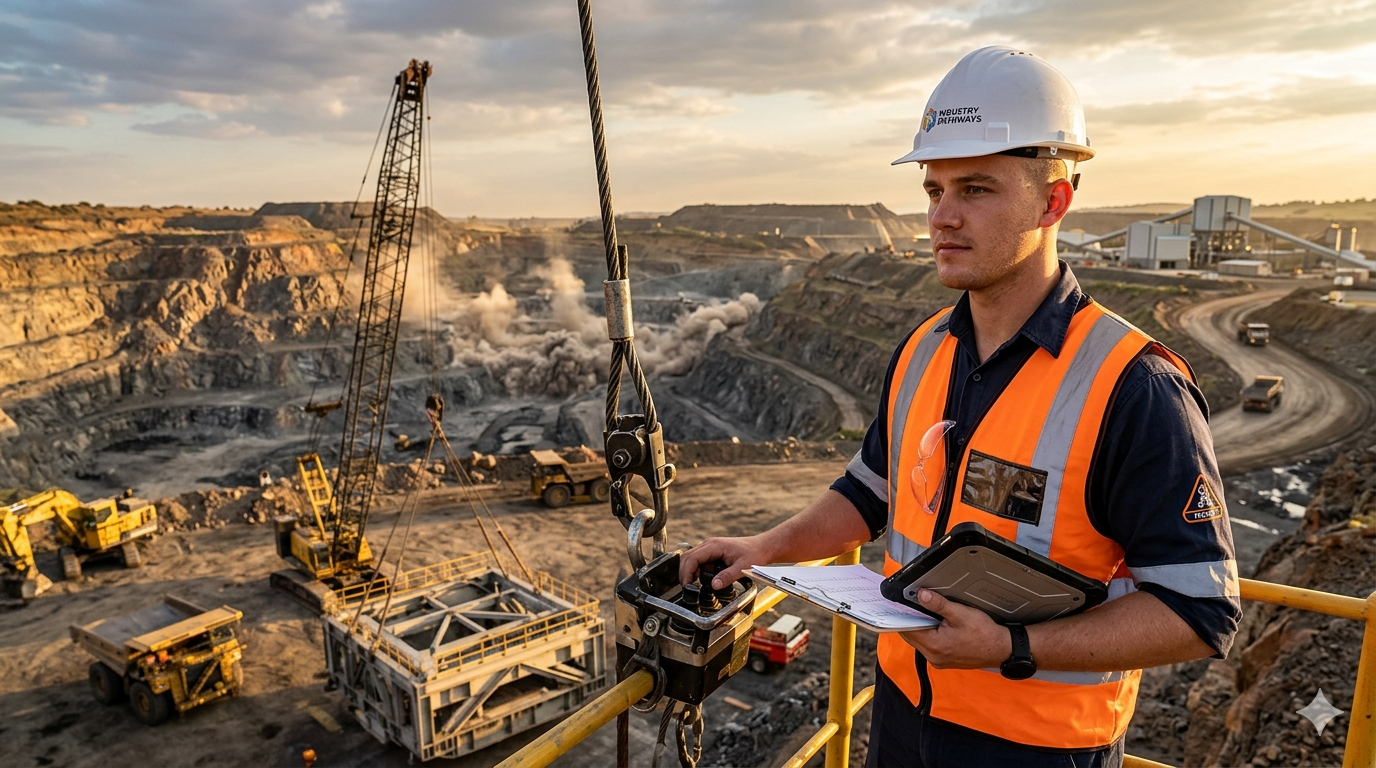
In the competitive landscape of the South African job market, a degree or diploma is often seen as the entry ticket. However, in high-stakes environments like mining, construction, and large-scale manufacturing, a piece of paper confirming your theoretical knowledge is only half the battle. If you truly want to “fast-track” your trajectory from a graduate or entry-level seeker to a high-value professional, the secret often lies in technical certifications.
Specific credentials, such as a Blasting Certificate or Rigger Training, do more than just add a line to your CV. They transform your profile from a “candidate with potential” to an “asset with immediate utility.”
The Shift from Generalist to Specialist:
Heavy industry operates on the principles of precision and safety. While an operations management background provides the bird’s-eye view of how a site should function, technical certifications provide the “on-the-ground” authority to execute specialized tasks.
Take Rigger Training, for example. Rigging is a critical function in almost every heavy industry sector. It involves the lifting and moving of massive loads, often worth millions of rands, using cranes, hoists, and tackle. A certified rigger isn’t just someone who knows how to tie a knot; they are experts in load weight calculation, center of gravity, and equipment integrity. Because the risk of error is so high, companies prioritize individuals who have undergone accredited training. For a graduate, having this certification means you can step into a supervisory role much faster because you understand the mechanical risks your team faces daily.
Breaking into Mining Sector:
The mining industry remains a cornerstone of the economy, but it is also one of the most strictly regulated environments in the world. Safety isn’t just a priority; it’s a legal mandate. This is where the Blasting Certificate becomes a game-changer.
In a mining context, a Blasting Certificate (or Miner’s Ticket) is one of the most powerful credentials an individual can hold. It grants the legal authority to supervise blasting operations—the very heart of extraction. For someone aiming for a management path, obtaining this certificate early is a massive strategic advantage. It proves you have mastered the complex safety protocols, explosive handling, and legal requirements of the Mine Health and Safety Act.
Without these technical “keys,” a professional might find themselves stuck in administrative or middle-management roles, unable to cross over into the core production side of the business where the most lucrative opportunities exist.
Three Ways Certifications To Accelerate Your Career:
1. Immediate Credibility and Trust
In heavy industry, “trust” is earned through demonstrated competence. When a hiring manager sees a valid rigger or blasting certification, they immediately know you have met a national standard of safety. It reduces the perceived risk of hiring you. You aren’t just a “new hire” who needs six months of hand-holding; you are a qualified operator who understands the stakes.
2. Increased Earning Potential
Specialized skills command specialized pay. Technical roles in mining and logistics often offer higher starting salaries and better “site allowances” than general administrative positions. Furthermore, because these certifications are often prerequisites for higher-level appointments (like Mine Overseer or Section Manager), they are literal stepping stones to the next pay grade.
3. Versatility Across Sectors
The beauty of technical training is its portability. A certification in rigging or heavy equipment operation is just as valuable in a harbor’s logistics hub as it is in a Northern Cape manganese mine or a Gauteng construction site. This versatility protects your career against localized economic downturns; if one sector slows down, your technical skills remain in high demand elsewhere.
Integrating Theory with Practicals:
Imagine a Warehouse Coordinator who also understands the technicalities of heavy lifting (Rigging). They can optimize the layout of a dispatch yard not just based on “flow charts,” but on the physical realities of crane movements and safety zones. This combination of “office” strategy and “floor” technicality is exactly what modern industrial companies are looking for in their future leaders.
How to get started:
- Identify the Demand: Research the specific requirements of the mines or firms in your region (e.g., the West Rand or the Platinum Belt).
- Choose Accredited Providers: Ensure the training provider is accredited by the relevant SETA (Sector Education and Training Authority) or the Department of Mineral Resources and Energy.
- Leverage Internships: If you are currently in a practical internship, ask to shadow the blasting or rigging teams. Use that exposure to decide which technical path interests you most before investing in the course.