
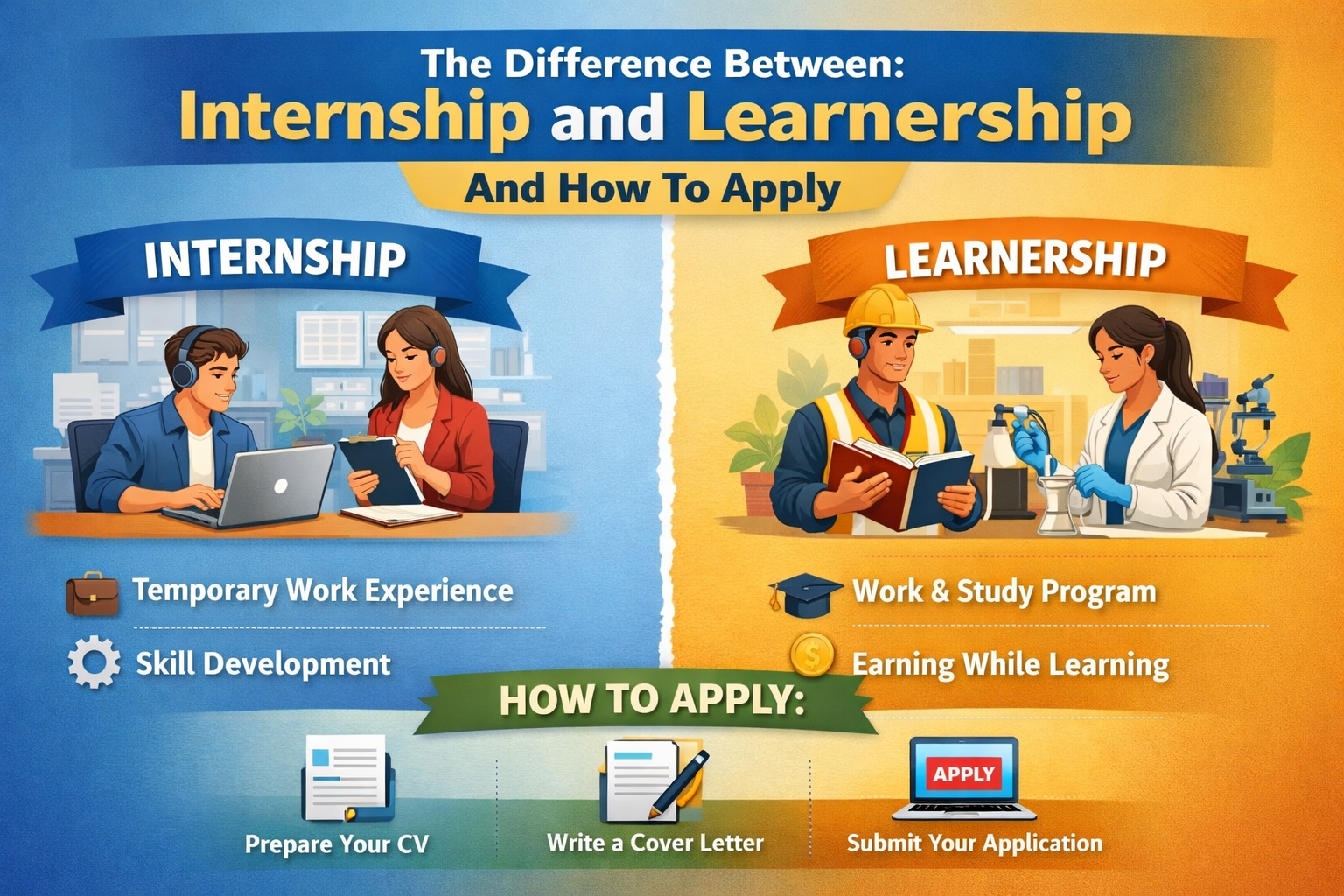
As known that unemployment is high in South Africa, Internships and Learnerships are the only two ways to kickstart your career or get the chance of getting work experience. While many people are still consufed by the two terms, here is a breakdown to the core differences between Internship and Learnership.
The confusion of the two terms has led to many people choosing wrong as there is one that offers a professional qualification and the other is just to get practical experience.
What is a Learnership?
A learnership is a work-based well structured learning program that leads to an accredited NQF qualification.
The program has an agreement between the employer, a learner and the training provider. Some learnerships do not offer a stipend while others offer a decent stipend which helps the learner with daily neccesities.
What a learnerships offers:
- A qualification: After completing a learnership, a certificate is given which is NQF-registered.
- Stipend: A learner is offered a stipend during a learnership to assist with necessities, like meals, transport and data.
- Dual learning: A learner eventually spends more time doing hands-on work, which is about 70% practical and 30% theory.
- Target audience: Learnership are usually given to unemployed who have no qualification and wish to acquire a skill or a qualification.
What is an Internship?
An internship is usually given to graduates, people who have acquired a qualification and are looking to gain hands-on exposure. It is a period of work offered by companies for about 3 to 24 months in order to give graduates on-the-job experience.
What an internship offers:
- Mentorship: As interships are offered to graduates, a learner is usually given a mentor to guide with daily tasks and mentorship.
- Work focused: The program is focused on practicals as the graduate has acquired theory during their academic years. It is about hands-on exposure so the graduate can gain experience on what they have studied in tertiary.
- Stipend: During an internship, a stipend is given in order to support the learner with the likes of transport, meals and the necessities of the learner.
- Duration: Interships usually take about 3 to 24 months of a well structured program to assist the graduate to gain experience in their field.
- Target audience: It is usually offeredd to graduates who have completed a qualification from the university or college and looking to gain experience.
How to Apply for a Learnership:
Applying for learnerships requires a lot of paperwork since it requires the applicant to register with the Sector Education and Training Authorities (SETA).
- Ensure that you register with Department of Labour as job seeker as many companies offering learnership apparently look for candidates from the database.
- Always check for companies offering learnerships online or the FASSET, SETA, HWSETA.
- Keep your CV updated at all times to avoid missing out on opportunities.
How to Apply for Internships:
With the high unemployment in the country, getting an internship is difficult. South Africa has many graduates looking for either internships or entry-level jobs.
- Check company portals that are offering internships such as Transnet, Sasol, Absa, and other big companies.
- Keep your Linked In profile optimized as 90% of companies look for their candidates on Linked In. Ensure your profile shows your qualifications and other projects you have completed.
- Ensure you have a Cover Letter as it is required by many companies when applying for internships. Explain to the company why you want to join them and what you bring to their company.
- Frequently visit job portals such as Indeed, Pnet, and websites that post job opportunities. And also follow whatsapp channels that post job opportunities such as “Graduates Connect”. Link: https://whatsapp.com/channel/0029VbCRkLP1NCrMVbuSfL1g
Which to choose between Learnership and Internship:
- Choose Learnership: Go for learnership if you have no qualification and you are looking to acquire a skill or a registered NQF qualification
- Choose Internship: Apply for an internship if you have successfully completed a degree or a diploma or have compled your studies at a TVET college in any field.